Investment Tips
Kuala Lumpur Property Investment: Rental Yield vs Capital Appreciation (2027)
2026-11-02 · 7 min read · By Hui Xin | REN 77667
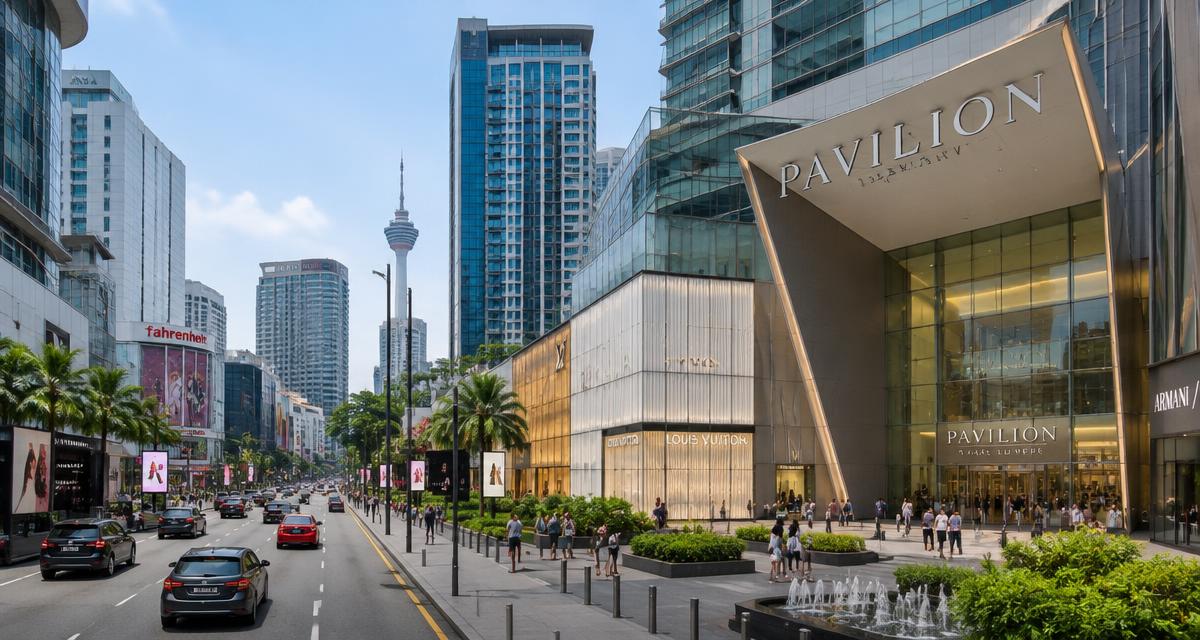
Reused AI-generated editorial illustration of Bukit Bintang; not a verified property view or investment evidence.
Kuala Lumpur property investment draws attention from Malaysian investors, Singaporean buyers, Chinese and other overseas buyers because of the city's employment centres, rail network, education institutions and urban amenities. These are reasons to investigate a location, not proof that every unit will rent quickly or rise in value.
Rental income and capital appreciation are different objectives: one concerns money generated while you own the property; the other concerns a possible change in its value. A property can have attractive rent but weak resale performance, or an appealing long-term story but negative monthly cash flow.
This is a planning guide for 2027, prepared on 2 November 2026—not a report of 2027 results. No verified building-level rental averages, occupancy rates or future appreciation percentages are established here. All financial figures below are illustrative assumptions, not market averages, property quotations or bank offers. This is educational information, not personalised financial, tax or legal advice.
1. What is rental yield?
Gross rental yield = scheduled annual rent ÷ purchase price × 100%. It describes rent relative to the price before vacancy, expenses and financing. Scheduled annual rent assumes 12 paid months; it is not a promise of rent collection.
For this guide, net operating rental yield = (annual rent actually collected − annual property operating expenses) ÷ purchase price × 100%. Operating expenses include maintenance and sinking fund, management, repairs, insurance and relevant recurring ownership charges. Financing, income tax and one-off acquisition costs are excluded from this definition and assessed separately. Always compare yields using the same denominator and cost treatment.
Assume a RM800,000 property and RM3,000 monthly rent. Scheduled rent is RM36,000 per year, giving 4.5% gross yield. After the hypothetical vacancy and operating costs in Section 5, net operating income is RM23,760 and net operating yield is 2.97%. These are arithmetic illustrations, not an achievable KL rental return.
2. What is capital appreciation?
Capital appreciation means a property's value increases relative to its purchase price; depreciation means it falls. An estimated or asking-price increase is not a realised gain. Cash is generally realised only when a sale completes, and the final result must account for acquisition costs, selling costs, financing costs and any applicable tax.
Location, existing and planned infrastructure, local employment, supply, demand and surrounding developments can influence prices. A new rail connection may improve convenience, but its effect depends on access, delivery, pricing and competing stock. Announced projects and optimistic forecasts are not guaranteed outcomes.
NAPIC/JPPH transaction, price-index and supply reports help provide market context. National or state-level movements cannot establish appreciation for a specific KL building, layout or entry price. Check comparable completed transactions and the building's condition; allow for a sale taking longer than expected or achieving a lower price.
3. Rental yield vs capital appreciation
The objectives can overlap, but neither compensates automatically for weaknesses in the other. Use this comparison to decide what you need the investment to do.
Investment objective
- Rental-income emphasis
- Recurring income after realistic expenses
- Appreciation emphasis
- Potential net resale gain
Income generation
- Rental-income emphasis
- Rent while tenanted; may stop during vacancy
- Appreciation emphasis
- Price gain generally realised on sale
Holding period
- Rental-income emphasis
- Review each tenancy and ongoing operating performance
- Appreciation emphasis
- May require a longer horizon; timing is uncertain
Main risks
- Rental-income emphasis
- Vacancy, arrears, repairs and rental competition
- Appreciation emphasis
- Price decline, oversupply and slow resale
Cash flow
- Rental-income emphasis
- Positive only if collected rent covers costs and debt service
- Appreciation emphasis
- A potential future gain does not pay today's bills
Market conditions
- Rental-income emphasis
- Achieved rents and competing units matter
- Appreciation emphasis
- Entry price, buyer demand and resale liquidity matter
Investor suitability
- Rental-income emphasis
- Income-focused buyers able to manage tenancy risks
- Appreciation emphasis
- Patient buyers with reserves and tolerance for price changes
4. What affects rental demand in Kuala Lumpur?
Public transport: use official operator maps to verify operating stations, connections and the practical walking route. MRT Corp also publishes planned-line information; distinguish proposed connectivity from services already operating. A nearby station alone does not establish an achieved rent or occupancy rate.
Employment centres and education: assess realistic travel times to workplaces, universities and other institutions, and whether your layout and budget match the intended tenant. Do not assume an announced institution already has staff or students on site.
Shopping, lifestyle amenities, tourism and business travel may affect tenant preferences, but demand is seasonal and segment-specific. Short stays are not interchangeable with long-term tenancies; check applicable building, management and local rules before relying on them.
Property management and furnishing affect convenience, costs and the unit's condition. Compare nearby rental supply, similar layouts, asking versus achieved rents, incentives and time on market. A premium address or furnished package alone does not guarantee tenants.
5. Worked example: is a RM800,000 property worth investing in?
Every input below is an invented educational assumption, explicitly not a current market average or project charge. The management fee is calculated on rent collected after one vacant month. Replace each input with evidence for the specific unit; do not deduct vacancy twice.
The assumed RM1,800 other annual operating budget combines repairs, insurance, assessment and quit/parcel rent where applicable. It is not an official bill or a complete allowance for every property. Add relevant letting fees, utilities borne by the landlord, furnishing replacement and other unit-specific costs without double counting. Income tax and financing are assessed separately.
Purchase price
- Amount / calculation
- RM800,000
Monthly rent assumed
- Amount / calculation
- RM3,000
Scheduled annual rent: 12 months
- Amount / calculation
- RM36,000
Vacancy allowance: 1 month
- Amount / calculation
- RM3,000
Rent collected: 11 months
- Amount / calculation
- RM33,000
Maintenance + sinking fund: RM400 × 12
- Amount / calculation
- RM4,800
Rental management: 8% of collected rent
- Amount / calculation
- RM2,640
Other annual operating expenses
- Amount / calculation
- RM1,800
Net operating income before financing and income tax
- Amount / calculation
- RM23,760
Gross yield: RM36,000 ÷ RM800,000
- Amount / calculation
- 4.5%
Net operating yield: RM23,760 ÷ RM800,000
- Amount / calculation
- 2.97%
Illustration only. These percentages are not KL market yields or forecasts. Purchase-price yield excludes one-off stamp duty, legal fees and setup/furnishing costs; use the total acquisition cost as an alternative denominator when comparing all-in investments.
6. Financing and investment returns
Financing changes the cash you commit and the money left each month. Loan instalments normally contain both principal repayment and interest: the full instalment is a cash outflow, but principal repayment builds equity rather than being an operating expense. Interest is a financing cost. Floating-rate changes can affect debt service; stress-test higher repayments and longer vacancy.
Continue the same hypothetical example with a RM600,000 loan and an independently assumed RM2,400 monthly instalment—not a bank quotation or a calculated offer. Annual debt service is RM28,800. Net operating income of RM23,760 less debt service gives −RM5,040 annual cash flow (−RM420 per month), before income tax and any omitted costs. A positive rental yield therefore does not guarantee positive cash flow.
Cash-on-cash return = annual cash flow after debt service ÷ cash initially invested × 100%. Assume a RM200,000 down payment plus RM40,000 acquisition/setup costs: RM240,000 invested cash. In this illustration, −RM5,040 ÷ RM240,000 = -2.1%. This measure excludes appreciation and principal-repayment equity; it is not total return. Cash-on-cash return can differ substantially from gross or net rental yield.
Use your bank's quoted loan amount, rate and tenure in the mortgage calculator. Account for acquisition and sale transaction costs, early settlement charges where applicable, tax and exchange-rate exposure separately. Overseas applicants should confirm bank eligibility rather than assume a financing margin.
7. Common investment mistakes
Buying only on a promotional rental guarantee: read the contract, duration, exclusions, payer's ability to pay and what happens after the guarantee ends. A marketing promise is not independently verified demand.
Overestimating rental income or using asking rents as achieved rents; ignoring vacancy, arrears, maintenance, sinking fund, repairs and tenant replacement costs; and failing to compare similar competing units.
Assuming capital appreciation is guaranteed, overlooking slow resale, or leaving financing and transaction costs out of the budget. Do not rely on a future sale to cover today's shortfall without a cash reserve.
8. Which strategy may suit you?
Regular-income investors should prioritise evidence of tenant demand and net operating income, while allowing for vacancies and active management. Buyers who need stronger monthly cash flow should model the actual loan and costs—not select by gross yield alone.
Long-horizon buyers who can tolerate market fluctuations may consider potential appreciation, but should still test carrying costs, resale liquidity and a no-appreciation scenario. There is no universal ideal holding period.
Overseas investors should add remote-management costs, currency movement, tax and eligibility checks. A balanced strategy can seek rental income and potential appreciation, but neither is guaranteed. The best property investment in Kuala Lumpur depends on your budget, evidence, cash reserves and objectives—not a universal ranking.
9. Evidence and limitations before a 2027 decision
Use NAPIC/JPPH reports for transaction and supply context, Bank Negara Malaysia for the interest-rate framework, and official transport sources for actual connectivity. Those sources do not certify an individual unit's rent, occupancy, investment return or suitability.
No current KL-wide yield average, building-level occupancy figure or 2027 price forecast is quoted in this article. Obtain recent comparable completed transactions, evidence of achieved rents and current management charges before committing. Verify the latest official reports, rules and bank terms again before publication or any purchase decision; future outcomes remain unknown.
10. Frequently asked questions
What is a good rental yield in Kuala Lumpur?
There is no universal good-yield threshold established here. Compare net income for similar properties, costs, vacancy, financing and risk. The illustrative 4.5% gross and 2.97% net figures are not KL benchmarks.
Is KL property still worth investing in 2027?
It may suit some buyers, but 2027 results are not yet known. Assess the exact unit, entry price, rental evidence, competing supply and cash reserves. The city name alone does not establish a worthwhile investment.
Is rental income better than capital appreciation?
Neither is universally better. Rent may support ongoing cash needs, while appreciation is uncertain and usually realised on sale. Choose according to your cash-flow needs, horizon and risk tolerance.
How do I calculate net rental yield?
Subtract annual operating costs from rent collected after vacancy, divide by purchase price and multiply by 100%. State whether you use purchase price or all-in acquisition cost. In this guide, financing and income tax are separate.
Does a higher rental yield mean a better investment?
No. A high headline yield may conceal vacancy, maintenance problems, difficult resale or higher costs. Verify rent and purchase-price assumptions, and compare net cash flow and risk rather than one percentage.
What expenses should property investors consider?
Include vacancy, management and sinking fund, letting and management fees, repairs, insurance, applicable assessment and quit/parcel rent, landlord-paid utilities and furnishing replacement. Also budget loan payments, acquisition and sale costs and applicable tax separately.
Can foreigners buy Malaysian property for rental income?
Eligible foreign buyers may purchase qualifying properties subject to applicable price thresholds, restrictions and required consent. Ownership does not automatically authorise every rental model. Check tenancy, building and local rules, tax and financing with the relevant authority, lawyer and bank.
How long should I hold an investment property?
There is no fixed suitable term for everyone. Model transaction costs, financing, lease and market conditions, your cash needs and resale options. A longer holding period does not guarantee appreciation or profit.
Official Sources
- NAPIC / JPPH — annual property market reports and regional tables (historical transaction, price/rental and supply context)
- Bank Negara Malaysia — OPR decisions (interest-rate policy context, not a housing-loan quote)
- MRT Corp — MRT3 Circle Line (planned connectivity; not an operating-service or appreciation guarantee)
Discuss your Kuala Lumpur investment priorities
Share your budget, rental-income needs and intended holding period with Hui Xin. We can discuss which property details and costs to verify; no rental return, appreciation or financing approval is promised.
Have a specific project in mind? Message Hui Xin.
Speak to Hui Xin